Using Whitespace as Luxury
Minimalism isn't about having nothing on the page; it's about extreme focus. Learn how whitespace (negative space) increases perceived brand value.

Sarah Jenkins
Whitespace is Active, Not Passive
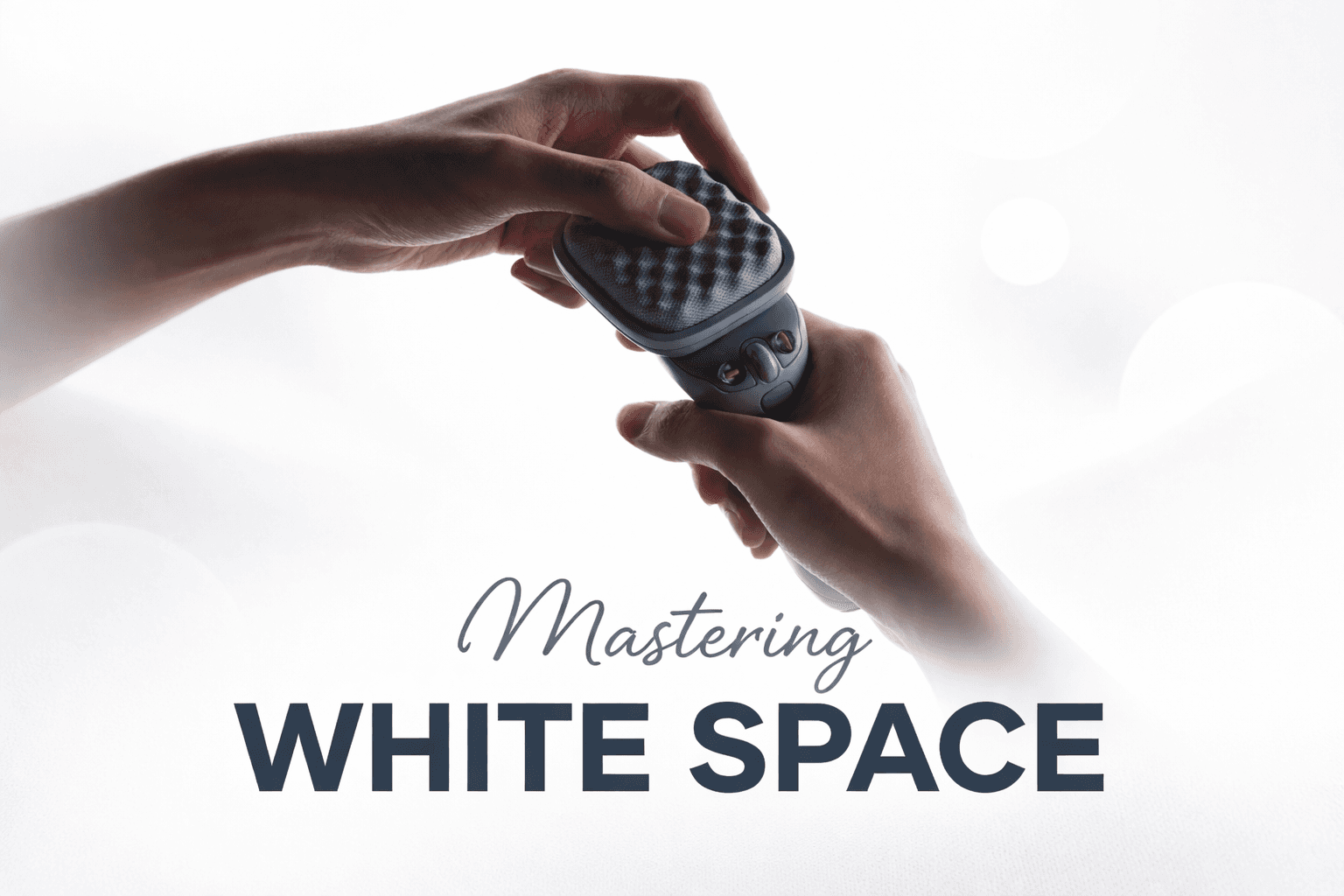
We don't view empty space as "nothing." We view it as an active design element. Whitespace creates breathing room around your content, forcing the eye to focus on the only thing that matters—usually the headline or the product image. By removing distractions, you control the user's journey and ensure they see exactly what you want them to see.
The Luxury Signal
Compare a luxury fashion site to a discount warehouse site. The discount site is packed with banners, pop-ups, and dense text. The luxury site has vast margins and small, elegant text. Crowded designs feel cheap; spacious designs feel expensive. By intentionally increasing your margins and padding, you automatically elevate the perceived value of your service or product.
Reducing Cognitive Load
Modern users are bombarded with information. A minimalist approach respects the user's brain power. By presenting one idea at a time, you increase the likelihood that the user will actually read and understand your message. Good design removes the noise so the signal can come through clearly, leading to better comprehension and higher conversion rates.
Using Whitespace as Luxury
Minimalism isn't about having nothing on the page; it's about extreme focus. Learn how whitespace (negative space) increases perceived brand value.
Sarah Jenkins
Whitespace is Active, Not Passive
We don't view empty space as "nothing." We view it as an active design element. Whitespace creates breathing room around your content, forcing the eye to focus on the only thing that matters—usually the headline or the product image. By removing distractions, you control the user's journey and ensure they see exactly what you want them to see.
The Luxury Signal
Compare a luxury fashion site to a discount warehouse site. The discount site is packed with banners, pop-ups, and dense text. The luxury site has vast margins and small, elegant text. Crowded designs feel cheap; spacious designs feel expensive. By intentionally increasing your margins and padding, you automatically elevate the perceived value of your service or product.
Reducing Cognitive Load
Modern users are bombarded with information. A minimalist approach respects the user's brain power. By presenting one idea at a time, you increase the likelihood that the user will actually read and understand your message. Good design removes the noise so the signal can come through clearly, leading to better comprehension and higher conversion rates.
Using Whitespace as Luxury
Minimalism isn't about having nothing on the page; it's about extreme focus. Learn how whitespace (negative space) increases perceived brand value.
Sarah Jenkins
Whitespace is Active, Not Passive
We don't view empty space as "nothing." We view it as an active design element. Whitespace creates breathing room around your content, forcing the eye to focus on the only thing that matters—usually the headline or the product image. By removing distractions, you control the user's journey and ensure they see exactly what you want them to see.
The Luxury Signal
Compare a luxury fashion site to a discount warehouse site. The discount site is packed with banners, pop-ups, and dense text. The luxury site has vast margins and small, elegant text. Crowded designs feel cheap; spacious designs feel expensive. By intentionally increasing your margins and padding, you automatically elevate the perceived value of your service or product.
Reducing Cognitive Load
Modern users are bombarded with information. A minimalist approach respects the user's brain power. By presenting one idea at a time, you increase the likelihood that the user will actually read and understand your message. Good design removes the noise so the signal can come through clearly, leading to better comprehension and higher conversion rates.